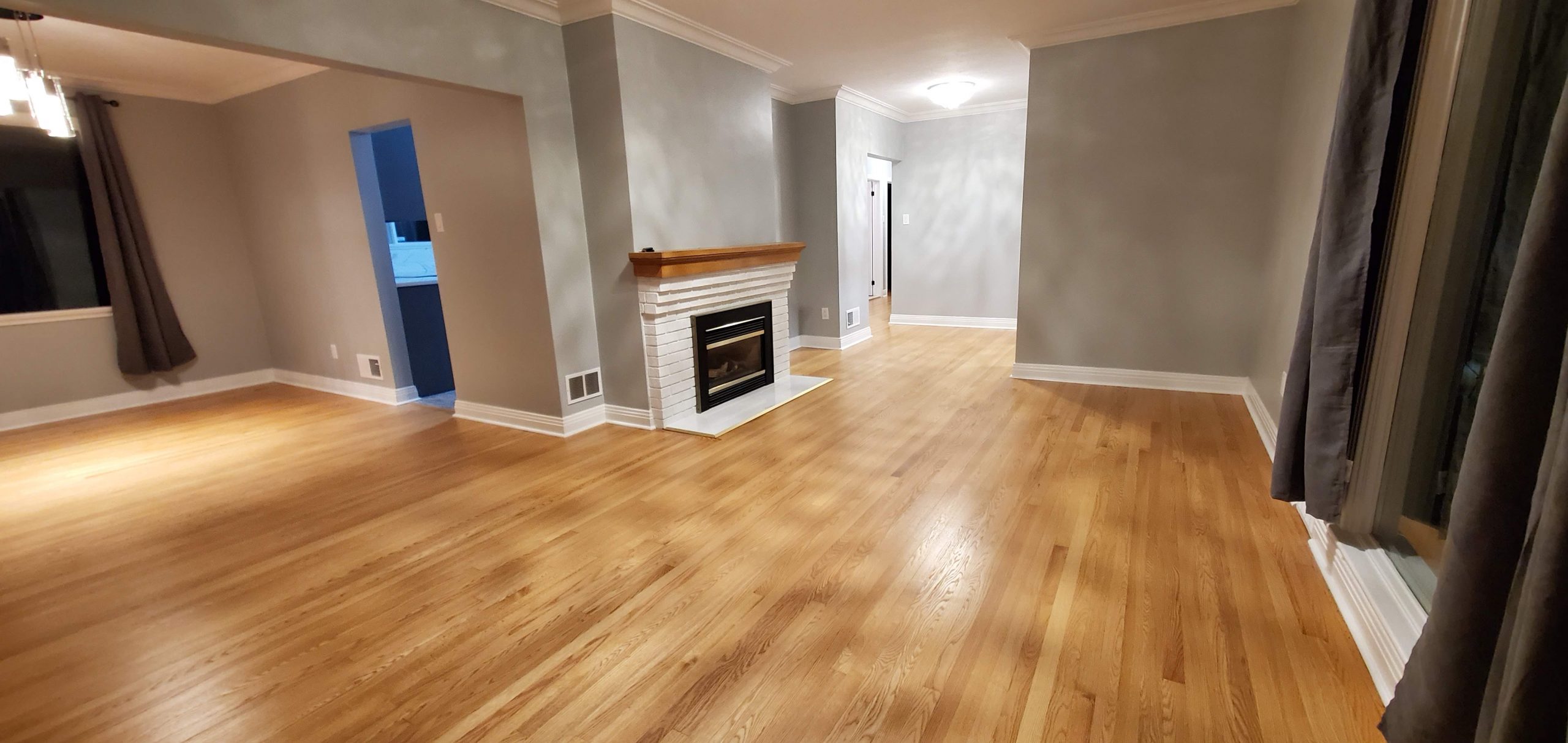
No Ontario basement is perfectly square, level, or obstacle-free. Concrete walls bow outward, floors slope, ductwork runs at the worst possible heights, and lumber never comes off the pile perfectly straight. Here’s how professionals handle every common challenge — and what to check before a single sheet of drywall goes up.
🏗 Don’t want to deal with any of this?
ILux Construction manages every challenge in your basement — from tricky ductwork to uneven slabs — so you get a perfect finish.
📞 Get a free quote → contact@iluxconstruction.com
4 Common Basement Framing Challenges (and How to Fix Them)
1. Uneven or Bowed Foundation Walls
Never frame to the wall — frame to a laser line. Set your laser level to project a plumb reference line and build your frame to that. Your wall may be a few inches away from the concrete in spots, but it will be perfectly straight and true. Fill the gap with extra rigid foam insulation — and remember to tape all seams for vapour control.
2. Warped or Twisted Lumber
Every pile of framing lumber has warped pieces. Never nail a bowed stud — it will show through your drywall. Use your milled-face hammer to grip and lever the stud straight before nailing. If a stud is too far gone, cut it out and replace it.
3. Ductwork and Plumbing
Always leave a small gap between your framing and any metal ductwork or pipes. Sound travels easily through contact points between wood and metal — direct contact will make your basement noisy every time the HVAC runs. Frame around obstacles, don’t frame tight to them.
4. Low Ceilings
The OBC (Section 9.5.3.1) requires a minimum finished ceiling height of 2,100 mm (approx. 6’10.5”) over at least 75% of the required floor area in any habitable room. The 1,950 mm measurement only applies to allowances under beams, ducts, or stairs. Your finished flooring — tile, underlayment, laminate — will eat 25–75mm off that clearance. Calculate your finished floor height before you set rough opening heights for doors, or you’ll fail inspection.
Don’t Forget Back Framing
Back framing is extra blocking added to every interior corner and along the ceiling line where walls meet. Without it, there’s nothing to screw the edges of your drywall sheets into — resulting in soft, cracking corners. It takes 20 minutes to add and saves hours of drywall repair later.
Ready to Transform Your Basement?
iLux Construction handles everything — permits, framing, insulation, drywall, and finishing — across Ontario.
👉 GET A FREE QUOTE
Contact iLux Construction Today | contact@iluxconstruction.com